Arsenal Legends: The All-Time Greats & Their Cards
The definitive collector's reference to Arsenal legends on cardboard — Henry, Bergkamp, Vieira, Adams, Wright, Brady and the Invincibles — which products actually carry each era, and live eBay listings for every name.
Arsenal’s history runs from Herbert Chapman’s 1930s pioneers through the 1971 Double, George Graham’s back four, Arsène Wenger’s revolution and the Invincibles — and every one of those eras left cardboard behind. This is the collector’s reference to the club’s all-time greats: who they were, and which products actually carry them, era by era.
That second part is where most buyers get lost, so start here.
First, the logistics: what Arsenal cardboard actually exists
There is no single continuous Arsenal card line. What exists is a relay of different licensors, and knowing which one covers your player’s years saves you money and mislabelled purchases:
- 1960s–early 1970s — A&BC Gum. The chewing-gum footballer cards that covered the McLintock/Charlie George Double era. Genuinely old, genuinely scarce in clean condition, and the hardest tier to buy safely.
- Mid-to-late 1970s — Topps’ UK footballer cards. Topps issued English footballer cards through the second half of the decade; collectors identify the runs by their card-back colours. This is Liam Brady and Pat Jennings territory.
- Late 1970s onward — Panini. Panini’s Football albums became the default English league collectible for a generation, running through the 1980s. These are stickers, not cards — a distinction that decides how they grade.
- Early 1990s — Pro Set. Proper trading cards for English football, covering the Graham back four and Ian Wright’s arrival.
- 1990s–2000s — Merlin Premier League. The sticker-and-card engine of the Premier League boom, and the home of the Wright, Adams, Seaman, Bergkamp, Vieira and Henry cardboard most Gunners grew up with.
- Late 1990s — Futera Arsenal club sets. The deep cut: club-licensed sets made specifically for Arsenal, rather than the player appearing inside a league-wide product.
- Modern day — Topps UEFA. Topps holds the UEFA club competitions licence and puts retired legends on current cardboard through retro and art lines. This is why you can buy a brand-new Henry or Bergkamp card today.
The rule that follows from all of it: an Arsenal-kit card cannot pre-date the player’s Arsenal years. The year on the back settles every listing dispute.
The Invincibles era (1996–2006)
Wenger’s sides, and the emotional core of modern Arsenal collecting. The 2003-04 team went the entire league season unbeaten — a story that keeps demand under this whole era.
- Thierry Henry — the club’s all-time leading scorer, signed from Juventus in August 1999, and for most Gunners the greatest player in the club’s history. His first Arsenal cardboard is 1999-2000; his earliest cards of all are mid-1990s French Monaco issues. The cornerstone name of the whole hobby’s Arsenal corner.
- Dennis Bergkamp — the “Non-Flying Dutchman,” signed from Inter in 1995. The classiest chase on this list: all-time-great status plus genuine artistry, and his first Arsenal-era Merlin issues are the era’s crown jewel.
- Patrick Vieira — Wenger’s first great signing, arriving in 1996, the midfield engine of the Doubles, and the captain who scored the winning penalty in the 2005 FA Cup final. His Arsenal cardboard starts in the mid-’90s Merlin runs and has aged into serious collector affection.
- Robert Pirès — signed from Marseille in 2000 and the league’s Footballer of the Year in the 2001-02 Double season. Under-collected relative to how good he was, which is the value angle.
- Freddie Ljungberg — the red-streak-hair icon of the era, at the club from 1998 to 2007. A nostalgia magnet whose cards still trade below the marquee names.
- Sol Campbell — arrived on a free transfer from Tottenham in 2001, which is its own piece of folklore, and anchored the Invincibles defence.
- Ashley Cole, Lauren, Kolo Touré, Gilberto Silva and Jens Lehmann — the rest of the unbeaten spine. Team-set builders chase these; single-player collectors mostly don’t, which keeps them affordable.
George Graham’s Arsenal and the 1990s
The decade of the famous back four, Ian Wright’s goals and the Cup Winners’ Cup nights. This era has its own dedicated ranking — see Top 10 Arsenal Cards of the 1990s for the card-by-card breakdown.
- Tony Adams — “Mr. Arsenal.” The one-club captain who lifted title-winning sides more than a decade apart, and the spine of the club through its most turbulent years. His early Pro Set and Merlin issues are the essential Adams cards, and like most defenders of the era they trade below the attackers.
- Ian Wright — signed from Crystal Palace in 1991 and the club’s all-time leading scorer with 185 goals until Henry passed him in 2005. His second life as a beloved broadcaster keeps pulling new collectors toward cardboard that is still genuinely affordable.
- David Seaman — the safest hands in the league, at Arsenal from 1990 to 2003. Goalkeeper cards are an underrated, cheap corner of the vintage market and a must for any ’90s team build.
- Lee Dixon, Nigel Winterburn, Steve Bould and Martin Keown — the rest of the back four. Collected as a unit by era completists; individually, the most affordable way into 1990s Arsenal cardboard.
- David Rocastle and Paul Merson — cult heroes whose cards carry sentimental weight well beyond their statistics, which gives them a demand floor most role-players never get.
Before the Premier League: the 1970s and 1980s
The hardest tier to collect and the one where condition does the most damage — but also where the genuine scarcity lives.
- Liam Brady — “Chippy,” the club’s creative heart of the late 1970s and a Player of the Year before leaving for Juventus in 1980. His Topps UK and Panini-era issues are the marquee target of the decade.
- Charlie George — scored the winner in the 1971 FA Cup final to complete the Double, and the celebration is one of the club’s defining images. A&BC-era cardboard, and rarely clean.
- Frank McLintock — captain of that 1970-71 Double side.
- David O’Leary — the club’s record appearance holder at 722 games, spanning from the late 1970s into the 1993 cup-winning side.
- Pat Jennings — the great goalkeeper who joined from Tottenham in 1977, another north-London crossing that still gets brought up.
- Kenny Sansom and Alan Smith — the 1980s left-back and the striker who won two Golden Boots and settled the 1994 Cup Winners’ Cup final. Smith bridges this era into the Graham nineties.
The post-Invincibles greats
Not yet “legends” in the Adams-and-Henry sense, but heavily collected and, for anyone who grew up after 2006, the names that carry the nostalgia:
Cesc Fàbregas (2003–2011, captain from his early twenties), Robin van Persie (2004–2012, a Premier League Golden Boot in his final season), Alexis Sánchez, Mesut Özil and Aaron Ramsey, whose 2014 and 2017 FA Cup final winners ended the club’s trophy drought. Their cards sit in the modern licensed era, which means real trading-card product with parallels and autographs rather than album stickers — a much easier build.
For the players carrying the shirt now, start at the Arsenal team hub or the Arsenal rookie cards list; Bukayo Saka, Martin Ødegaard and William Saliba are the modern core.
The ten Arsenal legends collectors chase most
Ranked by how much collector demand their cardboard actually attracts, not by trophies:
- Thierry Henry — the cornerstone. Target a 1999-2000 or Invincibles-era English issue for the story, or a modern Topps retro card for a clean display piece.
- Dennis Bergkamp — the connoisseur’s pick. First Arsenal-era Merlin issues, graded.
- Tony Adams — the captain. Early Pro Set and Merlin, cheap enough to buy properly.
- Patrick Vieira — mid-’90s Merlin onward; rising steadily with the Invincibles legend.
- Ian Wright — early-’90s Merlin; the most beloved-to-price-ratio name on the list.
- Robert Pirès — 2000-06 issues; the era’s most under-collected great.
- Freddie Ljungberg — pure Invincibles nostalgia, still affordable.
- David Seaman — the ’90s team build’s keeper slot.
- Liam Brady — the pre-Premier-League marquee name, and the scarcity pick.
- Charlie George — the Double-era icon; buy the condition, not the story.
How to buy Arsenal legends cards
These trade on eBay, not Amazon — the rails below open live listings for each name, and the live auction panel shows what is actually ending soon. Four rules worth following:
- Condition is the whole game. On thirty-to-fifty-year-old, kid-handled stock, soft corners, print lines and off-centering are the norm. Scrutinise photos and pay up only for copies that survived clean. Our centering tool will tell you whether a card is worth submitting before you spend on grading.
- Buy graded for the keepers. For any marquee name you are paying up for, buy it already slabbed (PSA or SGC) so condition and authenticity are settled. The grading ROI calculator helps decide whether a raw card is worth sending in.
- Read the set and year, not the headline. Early Merlin, Panini, Pro Set and Topps UK issues are easy to confuse, and an Arsenal-kit card cannot pre-date the player’s Arsenal years.
- Modern retro is the easy entry. A current Topps UEFA legend card gets you Henry or Bergkamp in gem condition without the vintage risk — see the Arsenal UEFA Champions League sets overview for how those lines work, or the Arsenal card sets index for the full product-line map from A&BC through to today’s Topps releases.
New to the club’s cardboard? Start with the Arsenal collecting guide and the collecting starter roundup, then work down the list one legend at a time. For the current-squad equivalent of this page, see best Arsenal cards and the Arsenal team set checklist.
Live listings ending soon
LIVELive eBay listings · prices and bids as eBay shows them now · tap a card to open it on eBay
Browse every live “Arsenal Thierry Henry Bergkamp card” listing on eBay →
Find these cards on eBay
The cards on this list trade on eBay, not Amazon — these open live listings for each one. Buy graded (PSA or SGC) for anything above four figures.
Products Featured on This List
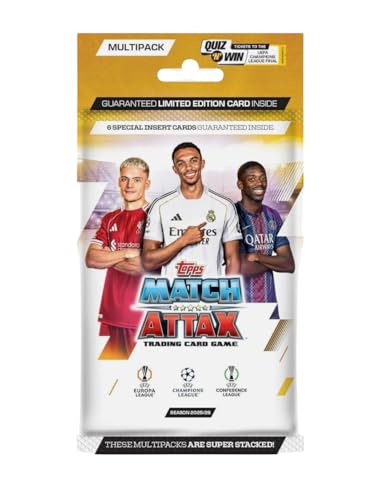
2025/26 Topps Match Attax Multipack - Look for a Guaranteed Limited Edition Card
61 owner reviews
2025/26 Topps Match Attax Multipack - Look for a Guaranteed Limited Edition Card.

2022-23 Topps Deco UEFA Artistry Dennis Bergkamp Arsenal Soccer Official Trading Card of the Pro
2022-23 Topps Deco UEFA Artistry Dennis Bergkamp Arsenal Soccer Official Trading Card of the Pro. A single licensed trading card — not a sealed pack, box or set.
- Officially licensed single card
- One individual card, not a sealed pack

2016-17 Topps Showcase UCL (UEFA Champions League) Soccer #3 Alexis Sánchez Arsenal FC Official Futbol Trading Card
2016-17 Topps Showcase UCL (UEFA Champions League) Soccer #3 Alexis Sánchez Arsenal FC Official Futbol Trading Card. A single licensed trading card — not a sealed pack, box or set.
- Officially licensed single card
- One individual card, not a sealed pack